Risk
Risk Management in Trading: Protecting Capital Before Chasing Returns
By Financial Markets Research Team · Updated 2026-11-12 · 8 min read
In simple terms
Risk management is the set of rules that limits how much you can lose on a single trade and across your account. It decides whether a trader survives long enough to learn — regardless of how good their analysis is.
Most trading education focuses on entries: when to buy, when to sell. Experienced practitioners often say the opposite is more important — how much you risk, and how you exit when you are wrong. A mediocre strategy with disciplined risk control can survive; an excellent strategy without it can fail on a single bad day.
The maths of losses
Losses and recoveries are not symmetrical. A 10% loss needs an 11% gain to recover; a 50% loss needs 100%. This asymmetry is why limiting drawdowns is so central.
| Account drawdown | Gain needed to recover |
|---|---|
| 10% | 11.1% |
| 20% | 25% |
| 30% | 42.9% |
| 50% | 100% |
| 75% | 300% |
Key takeaway
Protecting capital is not defensive timidity — it keeps you in the game long enough for skill and process to matter.
Position sizing
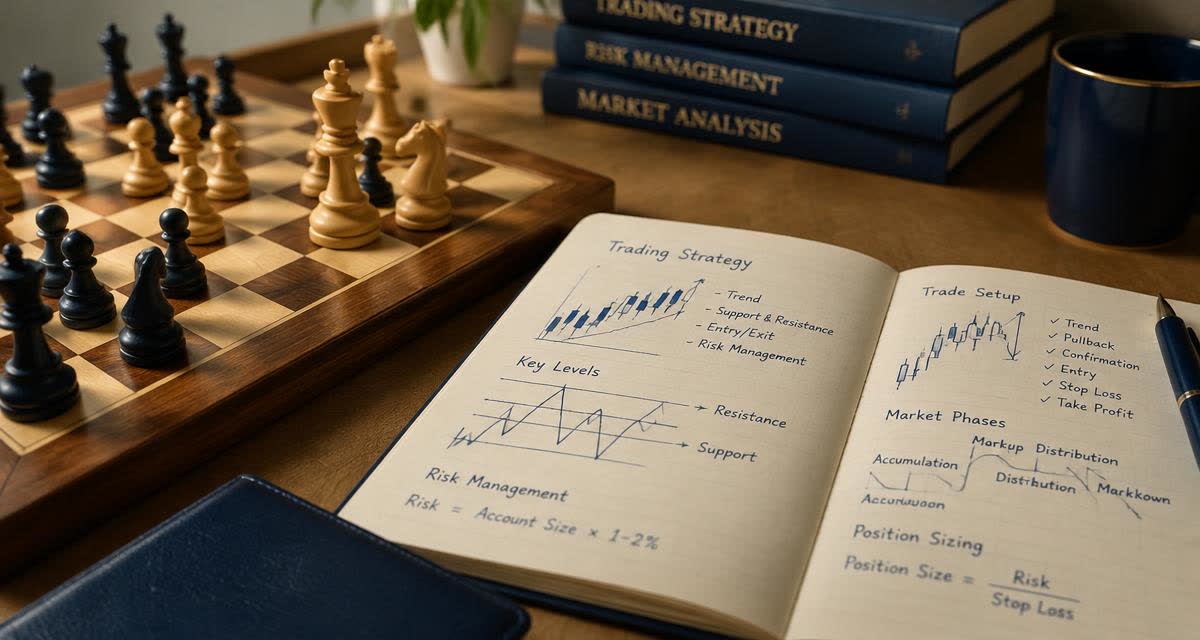
Many educators suggest risking a small fixed fraction of the account — often between 0.5% and 2% — on any single trade. The size of the position is then calculated from the distance to the stop-loss.
Worked example
With a $5,000 account and a 1% risk rule, the maximum loss per trade is $50. If your stop-loss is 25 pips away on a pair where one pip equals $1 per mini-lot, you could trade two mini-lots. If the stop is 50 pips away, you would trade one. The risk in dollars stays constant; the position size adjusts.
Stop-loss orders
A stop-loss instructs the platform to close a position at a specified price. It turns an open-ended risk into a defined one — with one caveat: in fast or gapping markets, the execution price can be worse than the stop level (slippage). Some providers offer guaranteed stops for an additional cost.
- Place stops where your trade idea is proven wrong, not at an arbitrary round number.
- Avoid moving a stop further away once the trade is open.
- Consider trailing stops to protect gains in trending markets.
Risk-reward ratio
If you risk $50 to potentially make $100, the risk-reward ratio is 1:2. A higher ratio means you can be right less than half the time and still be profitable in theory — though real-world costs and execution affect the outcome.
Your stop-loss is the price at which the market tells you your idea was wrong. Listen early.
Leverage and margin
Leverage lets you control a larger position with a smaller deposit (margin). If the market moves against you and your equity falls below the required margin, the platform may issue a margin call or automatically close positions. Using lower effective leverage than the maximum available is one of the simplest ways to reduce risk. Try the educational calculator on our homepage to see how leverage magnifies both gains and losses.
Risk note
Leveraged products can result in losses that exceed expectations very quickly. Check whether a platform offers negative balance protection and how margin close-outs work before trading.
Correlation and concentration
Three trades in EUR/USD, GBP/USD and AUD/USD may look diversified but all share exposure to the US dollar. Understanding correlation prevents accidentally multiplying the same bet. This is especially relevant during high volatility — see understanding market volatility.
Platform risk features to evaluate
Risk tools differ between providers. When comparing environments — including when you read our PFW Management review — consider:
- Availability of stop-loss, take-profit, trailing and guaranteed stop orders.
- Clear display of margin requirements and margin-call levels.
- Negative balance protection policies.
- Ability to set lower personal leverage limits.
- Transparent disclosure of spreads, commissions and overnight fees.
The human side of risk
Risk rules only work if they are followed. Fear and overconfidence regularly tempt traders to widen stops, double down or abandon a plan. Our article on trading psychology explores these behaviours and practical countermeasures.
A simple risk checklist
- What is the maximum I can lose on this trade, in currency terms?
- Is that within my per-trade risk limit?
- Where exactly is my stop, and why there?
- Am I already exposed to a correlated position?
- Do I understand all costs of holding this position overnight?
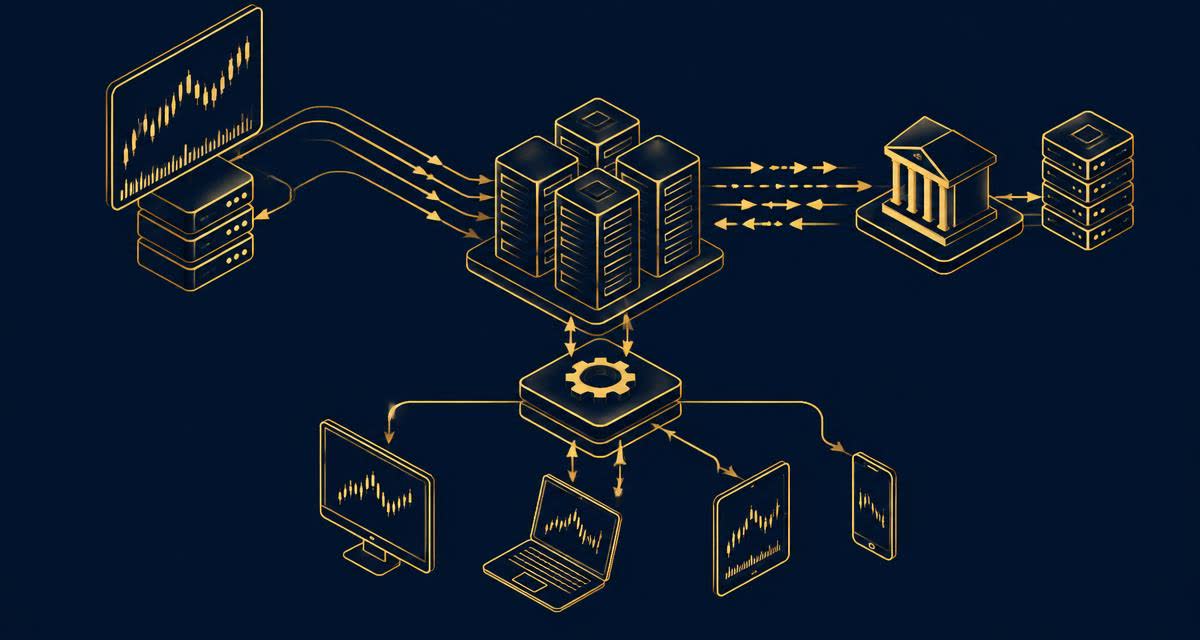
Risk management is not glamorous, but it is the core of sustainable trading education. It also shapes how platforms should be evaluated: tools and transparency matter more than promotional features. For a broader explanation of execution and order handling, see how trading platforms work.
Educational disclaimer: This article is for general education only and is not financial advice. Trading involves risk, including the possible loss of all capital. This site is independent and not affiliated with PFW Management.