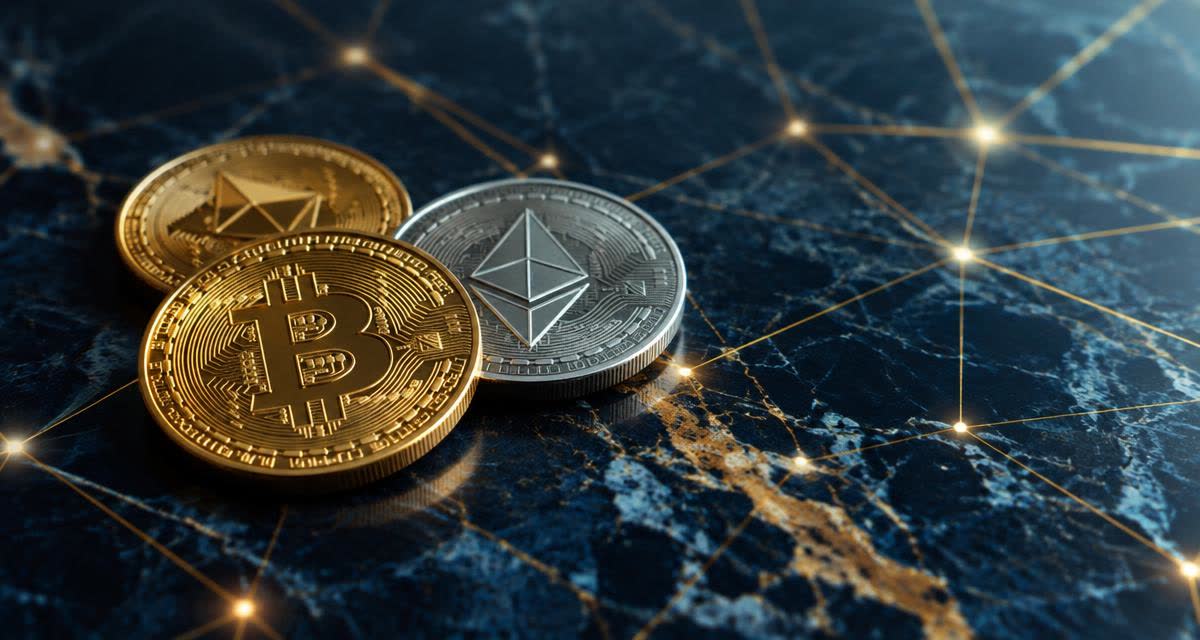
Digital Assets
Crypto Trading Explained: Assets, Exchanges and Real Risks
By Financial Markets Research Team · Updated 2026-11-12 · 8 min read
In simple terms
Crypto trading means buying and selling digital assets such as Bitcoin or Ether, or derivatives based on their price. Markets run 24/7, prices can move sharply in minutes, and the way you hold the asset — directly or through a contract — changes your risks.
Cryptocurrencies moved from niche experiment to mainstream financial topic within a little over a decade. Today, many multi-asset platforms list crypto alongside currencies, indices and commodities. That convenience makes it important to understand what exactly is being traded, and what is not.
What is a cryptocurrency?
A cryptocurrency is a digital token recorded on a blockchain — a shared ledger maintained by a network of computers rather than a single institution. Ownership is controlled by cryptographic keys. Bitcoin was designed as peer-to-peer money; Ethereum added programmable smart contracts; thousands of other tokens serve specific networks or applications.
Why prices move
- Supply mechanics — issuance schedules, token unlocks and burns.
- Demand and adoption — usage of the network, institutional interest, new products.
- Liquidity and leverage — large leveraged positions can trigger cascading liquidations.
- Regulation and headlines — policy announcements and exchange failures can move the whole market.
Spot trading vs derivatives
There are two broad ways to gain exposure, and the difference is fundamental.
| Spot crypto | Crypto derivatives (e.g. CFDs, futures) | |
|---|---|---|
| What you hold | The actual token | A contract tracking the price |
| Custody | Wallet or exchange account | No token held; broker account balance |
| Short selling | Usually not available | Typically available |
| Leverage | Rare or limited | Often available — amplifies losses |
| Costs | Trading fee, network fees | Spread, commission, overnight financing |
Multi-asset platforms frequently offer crypto as a derivative. When researching any provider — for instance, reading our PFW Management review — check which model applies, because it determines whether you could ever withdraw the asset to a private wallet.
Platform context
If you never hold the token, you are exposed to the platform's ability to honour the contract. If you do hold the token on an exchange, you are exposed to that exchange's custody practices. Neither is risk-free.
Volatility in crypto markets
Double-digit percentage moves in a single day are not unusual for major tokens, and smaller tokens can move far more. Markets never close, so prices can change dramatically overnight or at weekends when many traditional traders are away. Combine this with leverage and the potential for rapid loss becomes significant. Our guide to understanding market volatility explains how volatility is measured.
In crypto, the question is rarely whether a large move will happen — it is whether your position can survive it.
Custody and security basics
Self-custody
Holding tokens in your own wallet gives direct control but makes you responsible for safeguarding seed phrases. Lost keys usually mean lost funds.
Custodial accounts
Exchanges and brokers hold assets or balances on your behalf. Look for clear statements about segregation of client funds, proof-of-reserves practices where relevant, and regulatory supervision that can be independently verified.
Costs to understand before trading
- Spreads can widen significantly during fast markets.
- Overnight financing on leveraged crypto positions is often higher than on forex.
- Conversion fees may apply when depositing or withdrawing in different currencies.
- Network fees apply when moving tokens on-chain.
How to approach crypto as a learner
Start with the basics of risk management in trading: decide in advance how much of your capital is exposed and where you would exit if wrong. Many experienced traders use smaller position sizes in crypto than in forex precisely because of the larger swings.
Technical tools such as moving averages and support levels are widely used in crypto — see technical analysis basics — but thin liquidity on smaller tokens can make chart patterns less reliable.
Risk note
Crypto assets are highly speculative. Prices can fall sharply and some tokens have gone to zero. Never trade money you cannot afford to lose.
Crypto on multi-asset platforms
Some traders explore platforms such as PFW Management when comparing different trading environments that combine crypto with traditional markets. The appeal is a single interface. The trade-off is that conditions — leverage, spreads, trading hours, financing — may differ from dedicated crypto exchanges. Reviewing the platform research guide for PFW Management alongside our explanation of how trading platforms work can help structure that comparison.
Key takeaway
Crypto trading combines new technology with old market forces: supply, demand, leverage and emotion. Understanding whether you hold a token or a contract, how volatility behaves, and what you pay to keep a position open is essential groundwork before any platform evaluation.
Educational disclaimer: This article is for general education only and is not financial advice. Trading involves risk, including the possible loss of all capital. This site is independent and not affiliated with PFW Management.