How Trading Platforms Work: From Price Feed to Executed Order
By Financial Markets Research Team · Updated 2026-11-12 · 8 min read
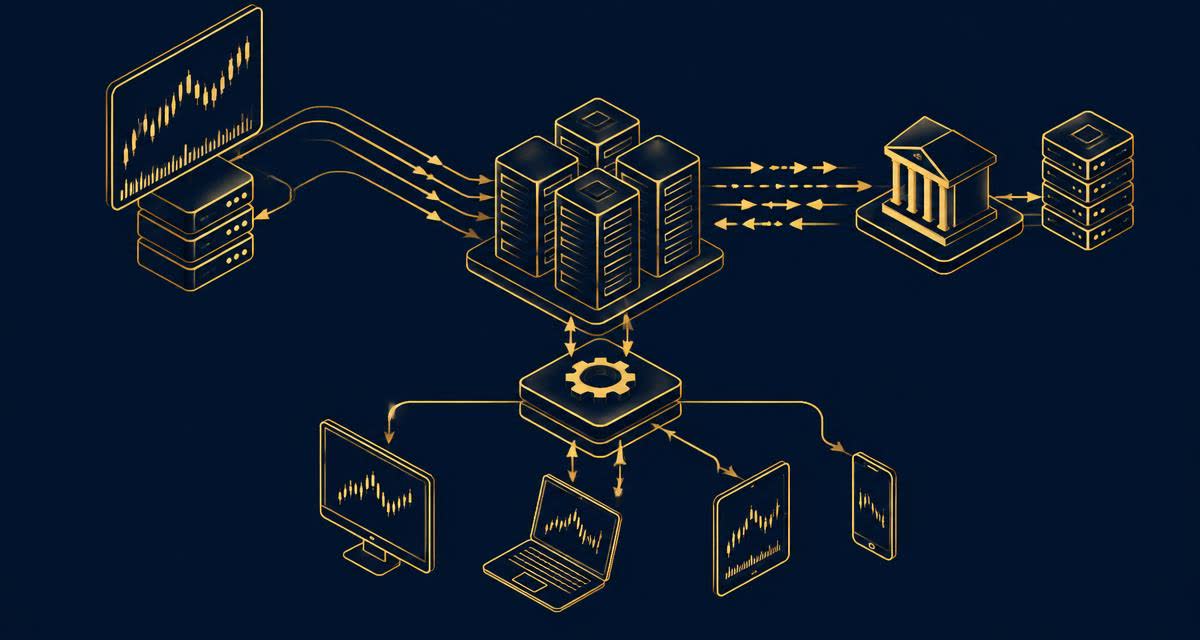
In simple terms
A trading platform is software that shows market prices, accepts your orders and passes them to an execution venue or counterparty. Its execution model, cost structure and safeguards determine much of your real trading experience.
Behind every 'buy' button sits a chain of systems: data feeds, risk engines, order routing, liquidity providers and account ledgers. Understanding this chain helps traders ask better questions when they compare platforms — including when they research providers such as PFW Management.
The core components
- Front end — the web, desktop or mobile interface where you view charts and place orders.
- Price feed — streaming quotes aggregated from liquidity providers or exchanges.
- Order management system — validates orders, checks margin and records positions.
- Execution layer — routes orders to external venues or fills them internally.
- Back office — handles deposits, withdrawals, statements and reporting.
Execution models explained
Market maker (dealing desk)
The provider acts as the counterparty to client trades, quoting its own prices. This can allow fixed spreads and instant fills, but creates a potential conflict of interest that should be managed and disclosed.
STP / ECN (no dealing desk)
Orders are passed through to liquidity providers or an electronic network. Spreads are usually variable and a commission may be charged. The provider earns from markups or fees rather than client losses.
Hybrid
Many providers combine models, internalising some flow and routing the rest. Order execution policies should explain how this works.
| Model | Typical spread | Revenue source | Questions to ask |
|---|---|---|---|
| Market maker | Fixed or variable | Spread, client P&L | How are conflicts managed? |
| STP/ECN | Variable, often tighter | Commission or markup | Who are the liquidity providers? |
| Hybrid | Varies | Mix | When is flow internalised? |
Research note
An order execution policy is a document that explains how a provider handles your orders. Regulated firms are generally expected to publish one.
Order types
- Market order — execute now at the best available price.
- Limit order — execute only at a specified price or better.
- Stop order — becomes a market order once a trigger price is reached; used for stop-losses and breakouts.
- Trailing stop — a stop that follows price by a set distance.
- OCO (one-cancels-other) — two linked orders where filling one cancels the other.
Costs: what you actually pay
Trading costs are not always obvious. The spread is built into the price. Commissions may be charged per lot. Overnight financing (swap) applies to leveraged positions held past the daily cut-off. Other charges can include inactivity, conversion and withdrawal fees. A transparent platform publishes all of these in one place.
The cheapest-looking spread is not the cheapest platform if financing and fees are hidden elsewhere.
Margin and account protection
On leveraged products, the platform calculates margin in real time. If equity falls below a threshold, a margin call or stop-out closes positions automatically. Features such as negative balance protection and segregation of client money are important safeguards; their availability depends on jurisdiction and the provider's regulatory status, which should be verified directly with the relevant regulator. Our risk management in trading guide covers margin in more detail.
Data, charts and analytics
Charting tools draw on the platform's own price feed, which may differ slightly between providers. Indicators, alerts and economic calendars help with analysis — see technical analysis basics — but are only as good as their underlying data.
Risk note
Platforms are tools. Easy access does not reduce market risk, and features such as high leverage or one-click trading can increase it.
How to evaluate a platform
Some traders explore platforms such as PFW Management when comparing different trading environments. Our research methodology sets out the criteria we use, and the PFW Management review applies them. In summary, look at regulation that can be verified, cost transparency, execution policy, risk tools, usability, education, and the quality of customer support.
Key takeaway
Understanding how platforms work turns marketing language into concrete questions. Who is my counterparty? What do I pay in total? What happens if the market gaps? Those answers matter far more than interface design. For market-level context, continue with what is forex trading.
Educational disclaimer: This article is for general education only and is not financial advice. Trading involves risk, including the possible loss of all capital. This site is independent and not affiliated with PFW Management.